- Test 2: Are the Components Coordinated by Design?
A coordinated design defines signal flow, control ownership, network assumptions, content formats, audio zones, failover behavior, naming rules, and support boundaries. Ask whether the supplier provides validated combinations, reference architectures, or configuration guidance that the integrator can adapt. If a claim depends on third-party protocols, APIs, SDKs, drivers, or gateways, record versions and ownership instead of relying on the word compatible.
Hikvision states that its core ProAV products are developed in-house, which may reduce some cross-supplier coordination. [1] The AV Awards 2026 finalist list included Hikvision’s P Series in Processing and Distribution Technology of the Year and the 128-MIC Ceiling Network Array Microphone in Audio Technology of the Year. [3] These nominations recognize individual products; system-level integration still requires project-specific validation.
- Test 3: Can the Design Be Repeated Through Commissioning?
Integration quality should survive the move from a design file to a finished room. Look for consistent device naming, reusable templates, documented firmware baselines, configuration backups, acceptance tests, and a clear method for resolving deviations. These practices reduce dependence on one engineer’s memory and make multi-room deployment more predictable.
AVIXA’s Audiovisual Systems Performance Verification standard provides a framework for defining what to verify, when to test it, and how to record the results. [4] A practical proof is a staged commissioning script: connect representative devices, load the planned configuration, run primary and fallback workflows, document defects, restore a backup, and repeat. The result should be a record that another engineer can understand—not simply a successful demonstration performed by the original designer.
- Test 4: Does Control Reduce User and Operator Complexity?
Control should turn technical complexity into a small number of predictable actions. A presenter may need Start Meeting, Share, Adjust Volume, and End Session; an operator may need source routing, display status, audio zone control, content publishing, and alarm context. If routine tasks require separate logins and inconsistent terminology, the solution may be connected but not operationally integrated.
Evaluate both the user and operator experience. Confirm what a room user sees, what a local technician can change, what a remote team can monitor, and which actions require a specialist tool. Role-based access, change logging, and recovery procedures matter as much as a clean touch interface.
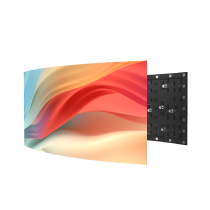
At BFM Marseille, system integrator LEDBOX Company used three curved LED displays to form a single studio backdrop. Producers can show a panoramic image across the entire backdrop or use different feeds on separate sections. [5] For a similar project, ask the operator to demonstrate both content modes with material from an actual production sequence.